Good instinct — that reframe changes the whole tone of the advice. Here’s the updated version with that reality baked in:
How to Write a Booking Email That Actually Gets Replies
Most booking emails fail before they are even finished. They are too long, too vague, or ask the recipient to do too much work to figure out if the conversation is even worth having. The irony is that the people sending them usually have something genuinely worth offering. The email just gets in the way. Here is how to fix that.
Understand who you are writing to
The person on the other end of your booking email is probably not a music lover sitting around waiting to discover new artists. They are likely a bar manager, a restaurant owner, or an events coordinator running a busy operation and dealing with talent booking because it is part of the job, not the favorite part. They are thinking about staffing, inventory, and whether last night’s service went sideways. Your email is one more thing on a long list. Respecting that reality is the foundation of a good booking email.
Get to the point immediately
Your job in the first two sentences is to make it immediately clear who you are, what you are asking for, and why it is relevant to them. Not your full backstory. Not everything you have ever done. Just the essential information that tells them this email is worth thirty seconds of their attention. If they have to scroll to find the point, you have already lost them. Think of your opening line as a handshake, not a presentation.
Be specific about availability
Saying you are flexible sounds accommodating but it actually creates more work for the other person. Now they have to propose something, wait for you to confirm, and manage the back and forth. Give two or three concrete windows instead and let them choose. It signals that you are organized, that you have thought this through, and that you respect their time. Small details like this shape first impressions more than people realize.
Include a realistic draw estimate and relevant links
This is the part most people get wrong. Venue owners want to know one thing above almost everything else: will you bring people through the door? Give them an honest picture of your typical draw, your social following if it is relevant, and a link to your website or a recent live video. One or two good links do more than a paragraph of description ever could. And be honest. Overselling your draw and underdelivering on the night is the fastest way to never get booked there again.
Follow up once, professionally, after seven days
Not sooner. People are busy and inboxes are full. A single follow up after a week is professional and expected. Keep it short, reference your original email, and make it easy for them to respond with a simple yes or no. If there is still no reply after that, move on. Chasing rarely works and has a way of burning goodwill you might need later. The right opportunities tend to respond. The ones that don’t were probably not the right fit anyway.
The bigger picture
The best booking emails feel less like a pitch and more like a clear, respectful message from someone who understands the venue owner’s world and has made it easy to say yes. That combination of clarity and consideration is rarer than it should be, which means getting it right puts you ahead of most of the messages landing in that inbox. Write it that way and your reply rate will show it.

Get The FREE venue tracker spreadsheet.
A FREE starter spreadsheet for original bands outside major music cities
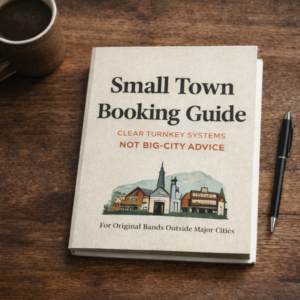
A practical booking guide for original bands in small markets.
Includes strategy, checklists, and editable venue tracking spreadsheets.